
One of my goals for 2026 is to reflect more, and this includes reflecting on all the art I engage with every day. While I often value good art for that “in the moment feeling”, I’ve realized that it’s also important to look back on these pieces and make sense of them in the context of my own journey.
2025 was not easy for me, but the art I experienced made it a bit easier. Here are my top picks for art that resonated in 2025.
Books
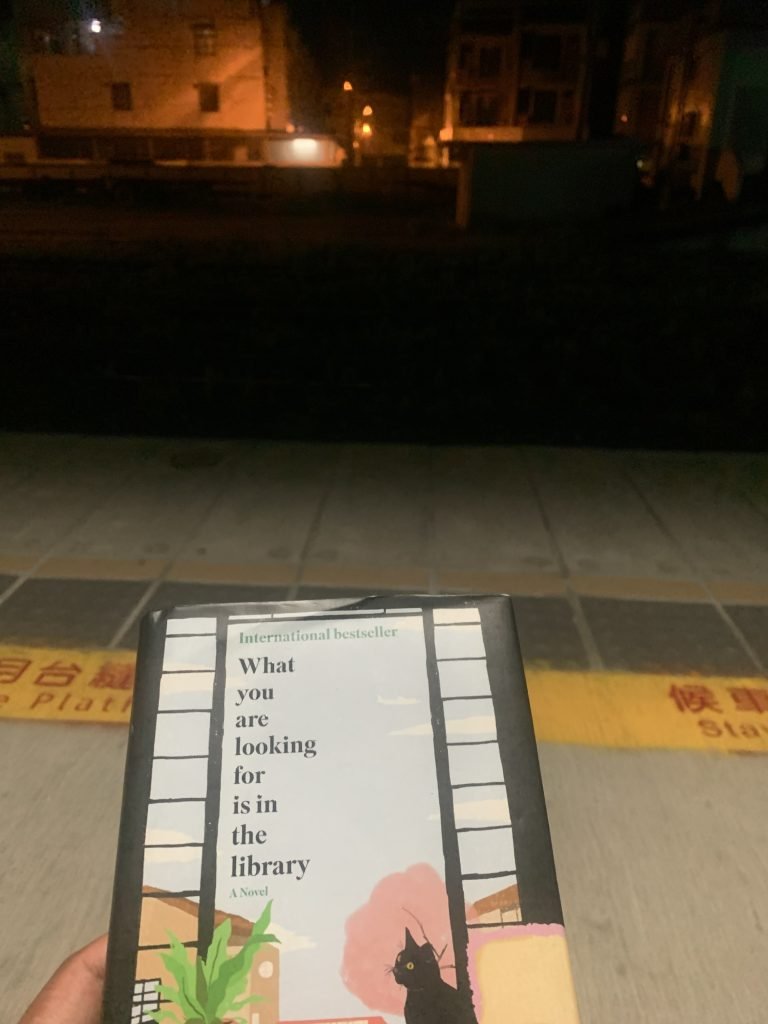
What You’re Looking For Is in the Library – Michiko Aoyama
Given to me as a parting gift from a colleague, Aoyama’s best-selling novel is about five people from different walks of life who by various circumstances end up in a community center library. There, they meet enigmatic librarian Sayuri Komachi, who gives each character just the book they need to completely alter their life path.
Each of the visitor’s one-on-one encounters with Ms. Komachi made me more and more curious about the librarian’s mysterious origins. Aoyma describes her as having a gigantic body with dexterous hands for felting, speed typing, and eating cookies. Her intimidating benevolence reminds me of a cross between Spirited Away’s River God and the good witch Zeniba.
When I took this book with me across the East Coast of Taiwan, I didn’t realize it would stay with me for a while. I found myself smiling on the train when each character experienced a positive life change, and I could relate to the struggles of so many different people— fresh college grads looking for a job, young professionals feeling bored, career changers recovering from perceived setbacks. With each resolution came a sense of confidence that, I too, could find something in a book that could resolve my own predicaments.
Time is a Mother – Ocean Vuong
Poetry was my first love as a writer, but my reading habit has sadly decreased over the years. The last book I read was Night Sky With Exit Wounds, and I remember really liking Ocean Vuong’s voice, but then life happened (i.e. COVID) and never got into reading his other works.
I was so inspired after reading What You’re Looking for is in the Library that the first thing I did after moving back to the US was get a public library card. Vuong’s second collection of poetry, Time is a Mother, was the perfect loan.
Something about the way he uses form that really intrigues me— it’s kind of like when you watch a kid use crayons to cover a page in ways you wouldn’t expect. “Künstlerroman” (Narrative of the Artist), for instance, is written backwards, as if watching a VCR on rapid rewind— a depiction of the poet’s longing, regret, and paralyzed inability to press life’s forward button.
There’s this quiet sadness and feeling of “uncontrolled control” that reminds me of Sufjan Steven’s Carrie and Lowell. Whether it’s the clever organization of stanzas or how his lines zigzag across blanks space towards a descent into mental breakdown, each poem embodies the poet’s beautiful and horrific wrestling with grief.
Visual Art and Film
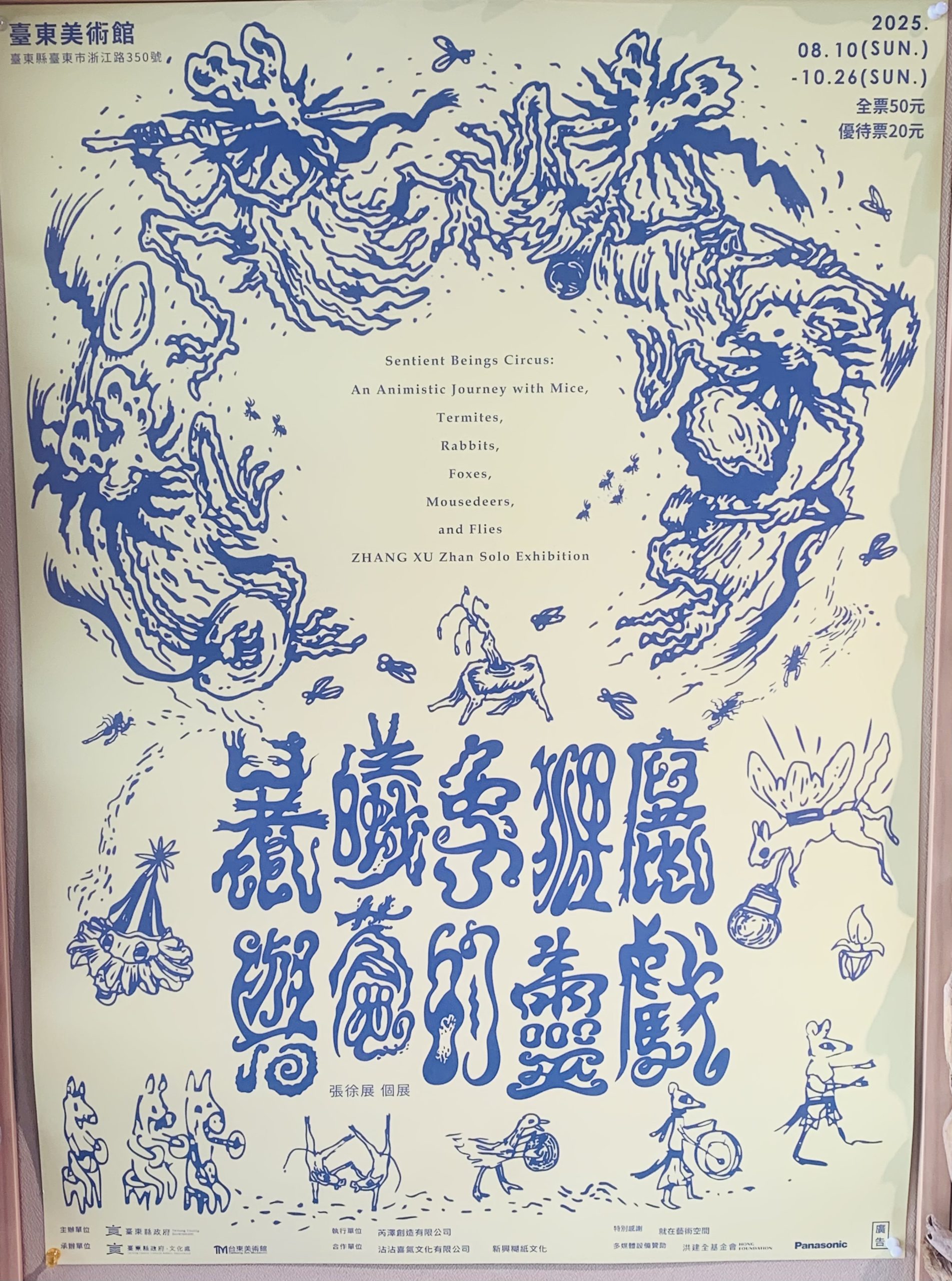
“ 熱帶複眼 / Compound Eyes of Tropical” – Zhang Xu Zhan
“Compound Eyes of the Tropical” is a 16-minute stop-motion animated film that tells of the story of the mouse-deer crossing the river. The artist, Zhang Xu Zhan, spent some time living in Indonesia, and noticed similarities between Taiwan indigenous mythologies and those told across Southeast Asia. The “compound eye” is represented by the fly because each story is, in a way, the same yet interpreted differently across cultures.
I happened upon this exhibit on my last day in Taitung, and I’m glad I took my time. The rest of the exhibit felt eerie, but in a way an intelligent way that helped sets the viewer up for the film screening. Walking through the wall of multilingual newspapers and ambient insect noises feels so eerie, as well as the paper-sculptures and films of termites, death, flies, and a German art song that gets sung at Taiwanese funerals.
It’s a comment on death and how we interpret it based on our social class and culture. If the mice, termites, and flies can sing and see death and life in a certain way, then perhaps I can also adopt new perspectives on how to live.
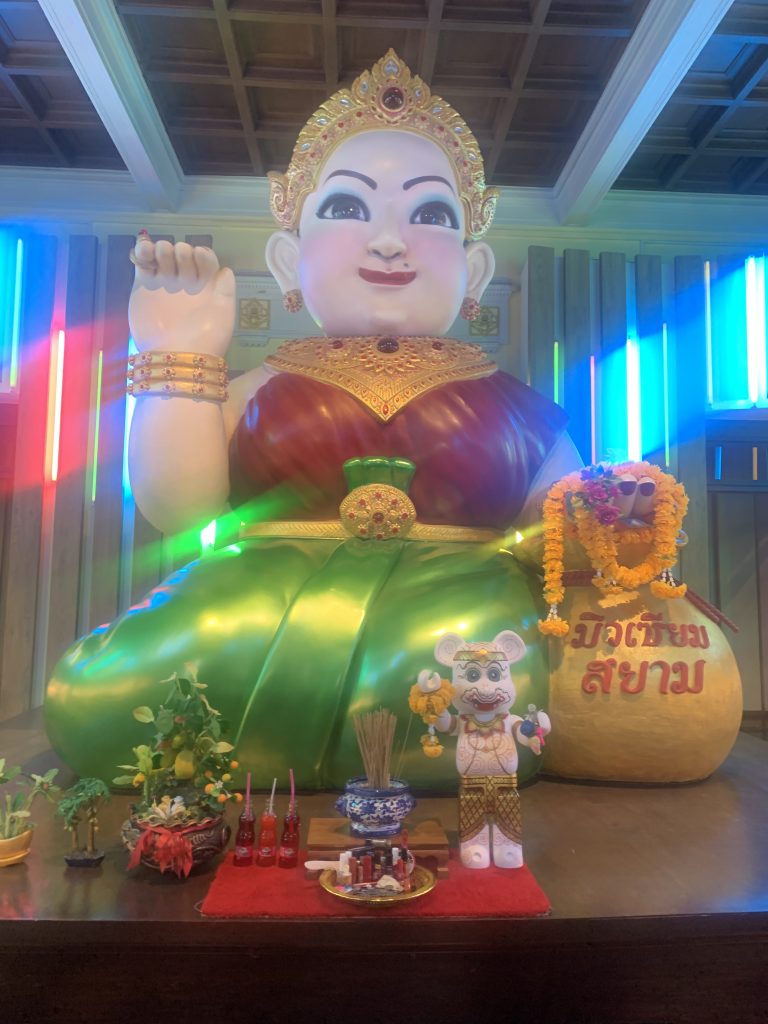
Decoding Thainess Exhibition – Siam Museum (Bangkok, Thailand)
A permanent exhibition located in the Siam Museum, Decoding Thainess is an interactive journey that explores Thai history and identity across 14 rooms. While it’s not the first thing tourists think about amid Bangkok’s magnificent temples and palaces, the experience I had was unlike any other self-guided museum tour I’ve done.
After buying a ticket and getting my English audio guide narrated by an upbeat voice actress, I followed the instructions to the various checkpoints where I solved puzzles, opened boxes, pulled out cabinets, and looked through various objects. You can check out a half-hour visual video tour here, but if you ever get the chance to go to Bangkok, it’s worth a visit and interact with the different spaces and activities yourself.
What I love about this exhibit was how “hands-on” it was— it’s as if the whole building is saying that identity isn’t stable or monolithic, but rather, constantly changing and dependent on the perspective of who you come into contact with. The whole time I walked through, I kept asking myself: What would a similar exhibit look like for other cultures? What about for the Filipino Diaspora? I spent a lot of time thinking about this, even after I had crossed into Cambodia. A good work of art, I believe, urges you to sit down and make something of your own.
Theatre
The Yellow Boat – David Saar
David Saar wrote this play about the life of his son Benjamin. Due to being born with hemophilia, Benjamin required constant treatment and infusions. Tragically, one of these transfusions contained HIV, and he passed away from AIDS several years later.
Upon entering, the most striking visual was the set: “life-size” blocks of different shapes occupy the stage, as if encouraging the audience to imagine what they could become. Throughout the play, they transform in imaginative ways around the plot: first, they’re a family living room; then, they turn into a ship that transports Benjamin and his friends on a faraway magical adventure; and finally, they become the hospital and deathbed where Benjamin spends his final moments.
Set in the 1980s when very little was known about the virus and disease, the storyline is essentially an inevitable countdown to death. Despite this, Benjamin is an artist at heart, and paints, colors, and make-believes the world as he sees fit. The story is not a tragedy, but rather a wholesome celebration and reflection on childlike discovery.
Music
”Madaling Araw” – Francisco Santiago
Kundiman are Filipino art songs from the Spanish colonial era which revolve around the themes of love and patriotism. As a classically-trained pianist and literary translator-in-training, these pieces are the perfect texts to sit down and play around with— not just as a creative challenge, but also as a way to explore my own heritage and conenction to Filipino culture.
I think a good representative Kundiman is “Madaling Araw” (Dawn), written by none other than the father of the Kunidman, Francisco Santiago (1889-1947). Throughout the song, the speaker compares the object of their love with the dawn, which represents both their lover and their desire for liberation from colonial rule.
I had the chance to hear this piece live (with both Tagalog and Spanish versions) at a Filipino Art Song concert in Honolulu, and the performers did not disappoint. I can’t lay my finger on what exactly makes Filipino music sound so, well, Filipino— but something about the sincere and lyrical melodic lines just make me feel a certain way.
| Sa gitna ng kadimlan Magmadaling araw ka At ako ay lawitan Ng habag at pagsinta Kung ako’y mamamatay Sa lungkot niaring buhay Lumapit ka lang, lumapit ka lang at mabubuhay | In the heart of darkness Become the dawn And I am suspended In mercy and passion If I am to die Of sorrow in this life Just come near, just come near And I shall live |
”Garçon de Mon Age” and Une Jolie Fille – TheFrenchKris
I discovered TheFrenchKris on a French Indie electro-pop Spotify rabbit hole. “Garçon de mon âge” might be his most well-known song, but the rest of his songs, especially those on his 2025 EP Une jolie Fille, are equally moody and synthy.
For my fellow nerds of phonological analysis, the most interesting part of the lyrics is all the connected speech. There’s a lot of deletion of non-stressed sounds (i.e. schwa) which leads to things like “‘j’pleure”, “chuis rempli doute”, and “de trop-d questions” (sorry, too lazy to transcribe the whole thing today).
My favorite moment— which I’d say is more so a creative choice— is the combination of the final consonant /ʒ/ in “age” and the word-initial /ʒ/ in the following “je/j’ai”. This seamless, dreamy transition between word boundaries brings our mood back to that simple, familiar feeling of crying.
In 2025, I felt very adolescent. Perhaps it’s because of my life being in a constant transition, or maybe it has to do with all the uncertain changes happening in our world today. Whatever it is, I agree— it’s more that it’s okay, at any age, to feel just like this.
| Moi aussi je pleure Vous savez? Un peu comme un Garçon de mon âge J’ai peur Un peu comme un Garçon de mon âge Je suis rempli De doutes De trop de questions Finalement un peu comme un Garçon de mon âge | I also cry You know? A bit like a Boy my age I’m afraid A bit like a Boy my age I’m filled With doubts And too many questions In the end a bit like Boy my age |